

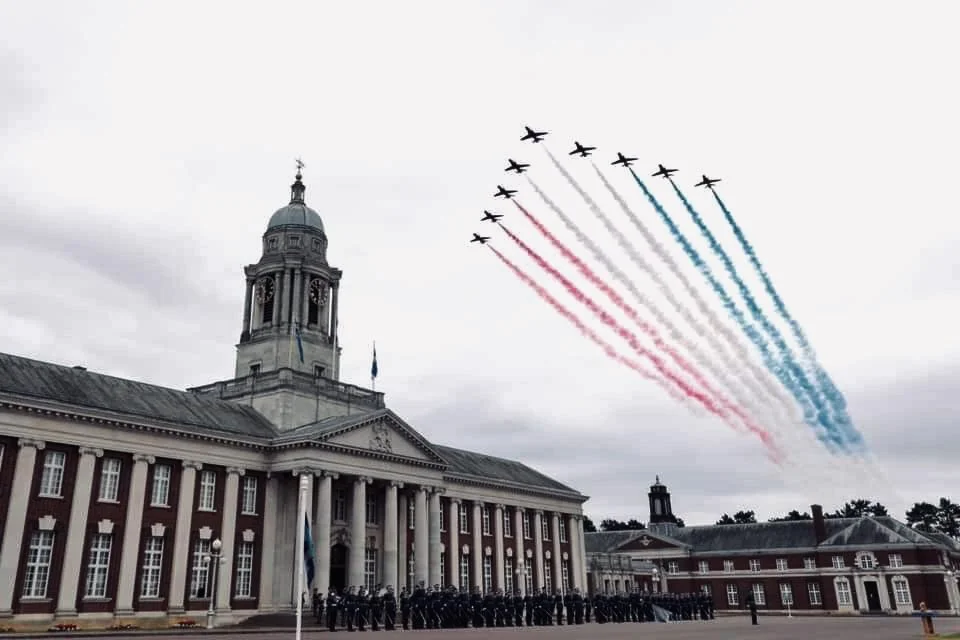
The Leadership Academy
Everything you need to prepare for officer selection, all in one place. Planning exercises, leadership theory, practice material and expert guidance, built to help aspiring Army, Navy and RAF officers walk into selection ready to stand out.
Officer Recruitment
Links below for training and selection support


British Army
Royal Navy

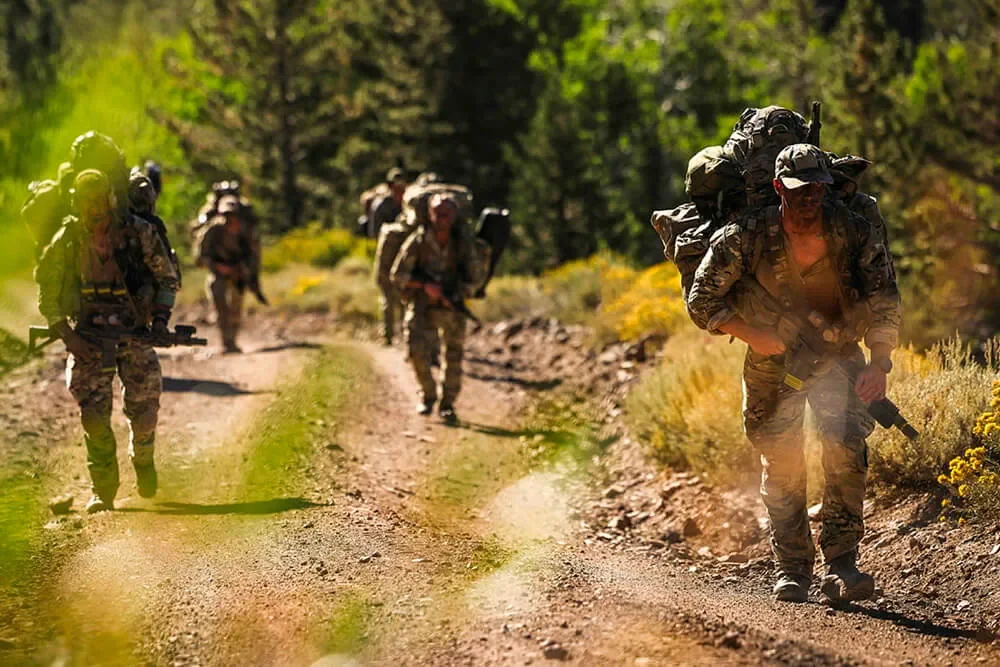
Royal Marines
Royal Air Force
Becoming an officer in the British Armed Forces is one of the most demanding and rewarding journeys you can take, and preparing for it shouldn’t mean piecing things together from a dozen different places. Whether you’re aiming for the Army Officer Selection Board, the Admiralty Interview Board or RAF Officer and Aircrew Selection, everything you need is right here. That includes realistic planning exercises to sharpen your problem-solving under pressure, clear explanations of the leadership theory that underpins how our Armed Forces lead, and a growing library of guides, practice material and insight from people who’ve been there. Prepare with purpose, arrive with confidence.
We aim to give you the fundamentals, irrelevant of what service you choose. During the selection process, you’ll be assessed on specific attributes and need to demonstrate you have a sound understanding of what you are applying to do. Between us, we’ve working within every phase of Military Training and worked with every service. We simply want to improve the standard of Military Officer coming through the pipeline and so we do this for free. Our actual revenue is made through private sector, leadership consultancy, not this.
Good luck, Be Extraordinary.
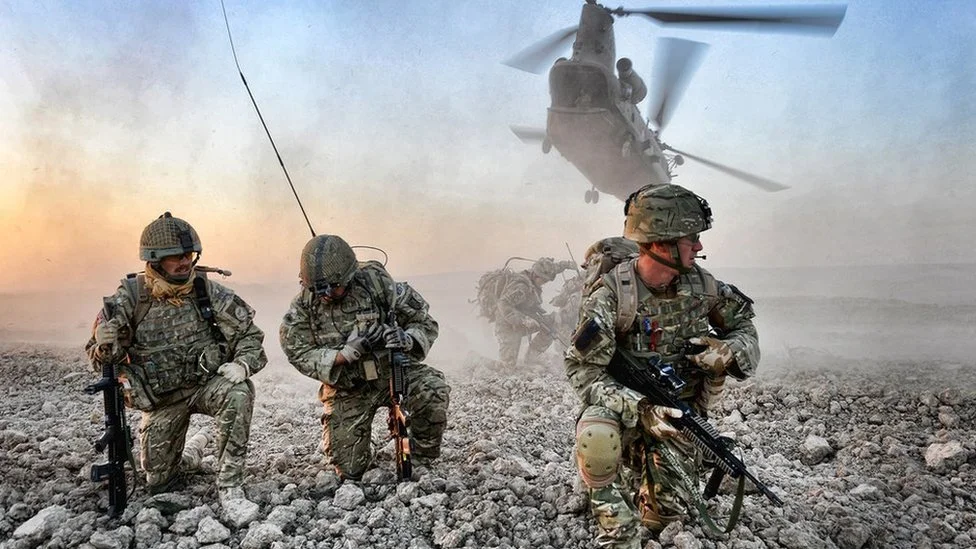
Mock Planning Exercises
This brief, Practice planning exercises for officer selection, helps candidates prepare for the planning exercise used at the Army (AOSB), Royal Navy (AIB) and RAF (OASC) selection boards.
This brief, Practice planning exercises for officer selection, helps candidates prepare for the planning exercise used at the Army (AOSB), Royal Navy (AIB) and RAF (OASC) selection boards. It sets out a toolkit for speed, distance, time and fuel, and a six-step method for tackling any scenario.
Three exercises follow, each harder than the last. IRON RATION is an Army transport problem with a road that closes at 1400. STORM PETREL has a Royal Navy shore party on a storm-hit island, short of fuel and seats. HIGH WATER is an RAF expedition racing a storm with an injured cadet and canoes slowed by the wind. Each exercise has a map, a question, and a worked solution with timed movements, a fuel check, rejected alternatives and key lessons. The message throughout is that a strong plan meets every deadline, keeps a margin for error and can be explained clearly.
How a leader’s attitude shapes the whole team.
The Betari Box is a simple model that shows how attitudes and behaviours pass between people in a cycle. You’ll find this is widely used in leadership and conflict management training. Its message is direct: you cannot control how other people behave, but you can choose your own attitude and often that’ll have the desired effect anyway.
Putting people first.
Maslow’s hierarchy of needs is a theory of human motivation, in short, in his 1943 paper, Maslow set it out ‘A Theory of Human Motivation’. It points that humans are driven by a series of needs, and that basic needs must usually be met before higher ones can motivate us. It is often drawn as a pyramid, although Maslow never drew one himself. For a leader, it raises one simple question: what do my people need right now to give their best?
Making faster, better decisions under pressure.
The OODA loop is a four-step decision cycle: observe, orient, decide and act. Developed by Colonel John Boyd, a United States Air Force fighter pilot and strategist. In very simple terms, whoever moves through the cycle faster (and more accurately) than their opponent gains the advantage. It means you act before the other side has made sense of what is happening. The model is now well known but if you are thinking about becoming an officer, it is one of the most useful tools you can learn before you arrive.